Proof
The instruments, shown. The discipline, in the open.
We can’t show you a client roster. We can show you the instruments the field can’t: the weekly receipt with its holdout math, the working demonstration, and the checks that stop a page before it can overclaim. What’s synthetic is labeled synthetic, every time.
Receipt anatomy
The discipline is in what it refuses to claim.
Any dashboard can show a big number. The harder thing — and the one an owner can trust — is a number that knows its own limits. Here is what the weekly receipt is doing.
It leads with the incremental number, not the gross
The headline is the holdout-adjusted incremental recovery — what the engine added beyond the patients who would have come back on their own — measured against a control cohort the system withheld in advance.
When it can’t measure, it says so
A brand-new pilot week with no control cohort can’t support an incrementality claim. Instead of inventing one, the ledger suppresses the dollar headline to “—” and tells the owner exactly why. The honest answer is part of the product.
Every figure is reproducible
The cohort split is a deterministic draw fixed before any outcome is known, so the holdout can’t be gerrymandered after the fact. The same inputs always produce the same receipt.
A week with a reportable result
A week it can’t measure yet
The build, shown
One clinic, brand to finished page.
01 · The brand, read closely
Voice, rules, and colors taken from the clinic’s own site and reviews — written down before anything is built.
02 · The treatment worth leading with
Twelve treatments scored on the clinic’s own menu and prices; one chosen to lead the page — with the reasoning on the record.
03 · A look decided on evidence
Palette, type, and page structure resolved against measured references — adopted, held, or deferred, each with its reason.
04 · The page, delivered
The finished page, composed from everything above — shown here without clinic photography. Patients and providers are never synthesized; a live build composes from the clinic’s own licensed imagery.
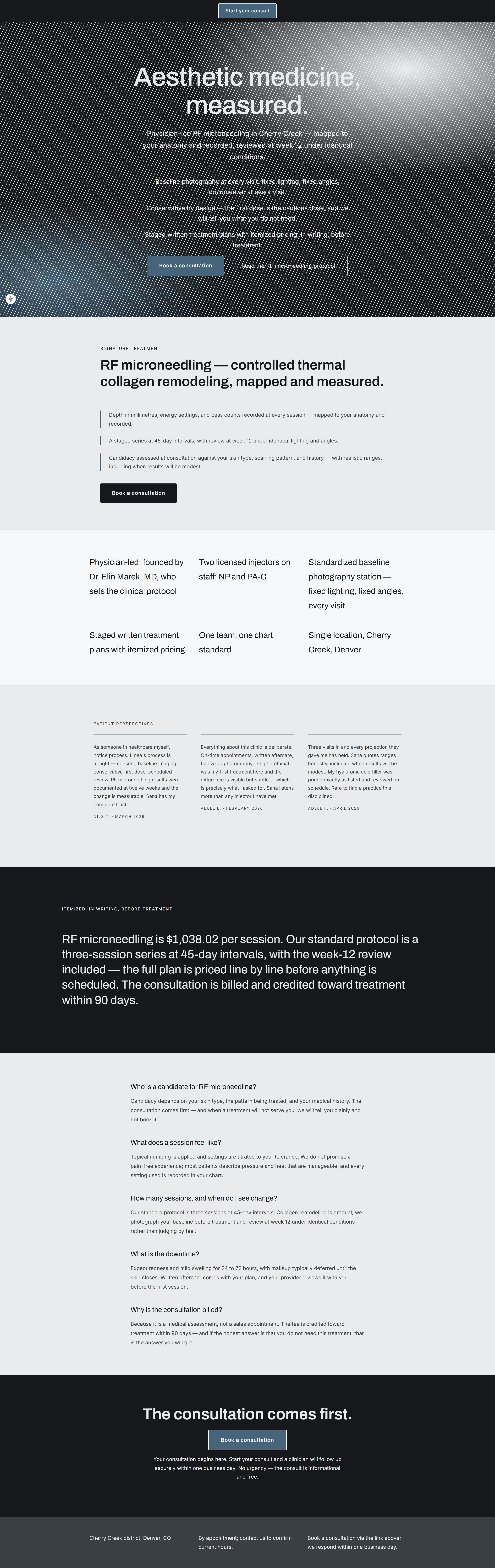
Your page is built the same way — from your brand, your treatment menu, your photography.
The artifacts
The documents you’d actually hold.
An engagement starts with a leak audit on your own numbers and reports every month with a receipt measured against a withheld control. Here are both documents, rendered by the same code paths that would produce real ones — on a demonstration clinic, labeled synthetic on every page.
The leak audit
The one-page-per-finding accounting an engagement starts with: what walked out, where, with the derivation rules printed on the page — including the rules that found nothing. This sample is rendered on a demonstration clinic; a real audit runs on your own call log, consult list, open quotes, and calendar.
The monthly receipt
The document a clinic gets at the end of the month: every recovered dollar traced to the action that recovered it, the incremental figure separated from the gross, and a front page that refuses to report when a month can’t be measured.
Both months of this demonstration — including the one it refuses to report — can be replayed at /demo/yield-ledger.
The mechanism, end to end
One walked consult, followed through the built system: the recovery cadence, the recorded quote, the financing follow-ups — and beside it, the patient the system deliberately leaves alone. The withheld lane is not a gap in the product; it is the measurement.
The demonstration
The software, working.
Three mechanisms, each shown as it behaves. These are illustrations of how the system runs, not records of a result — the synthetic clinics named below are demonstration clinics, not real practices.
Missed-call recovery
The call that rings out, answered.
Reactivation
Dormant patients, re-engaged with restraint.
Built from the clinic’s own retention data, sent under a clear opt-out, routed to the consult path the clinic already uses.
The concierge
It answers in the clinic’s voice — and knows where to stop.
The harder discipline in a clinic is the opposite of a chatbot that answers anything: knowing where to stop. Below the answer are the two beats that matter — it won’t over-promise, and it honors an opt-out immediately.
It won’t over-promise
It honors an opt-out, immediately
Every reply — the warm ones and the firm ones — is drafted, checked, and only then sent. Nothing the software writes goes out unread.
The page, composed
A treatment page built for one clinic, not stretched from a template.
Each treatment a clinic markets gets its own page, with claims sourced and dated and pricing posted rather than gated behind a call. The crafted page sits beside a flat template so the difference is legible.
Checked before it can go live
A page that fails the check does not ship.
Before any page goes live, it is checked against the clinic’s claims and its state’s requirements. A page that would carry an unsupported figure, or a claim a medical board prohibits, is stopped by the check — it fails closed. It is not a note in a review a busy week might miss.
Compliance by construction
The safeguards are how it’s built, not a setting bolted on.
Opt-out is honored on the first request, in the mechanism, not the contract. Patient information is isolated per clinic by the system itself. And before we onboard a clinic, we sign a Business Associate Agreement covering how its patients’ information is handled.
Patient information
Before we onboard your clinic, we sign a Business Associate Agreement (BAA) covering how your patients’ information is handled.
What you already run
It’s built to work alongside your practice-management system, not replace it. We name an integration once it’s built, never before.
Who runs it
We set it up, tune it, and watch it, working alongside the people who built it. It isn’t one more thing to manage at the end of a clinical day.
The pilot
See it on your clinic.
Tell us about your clinic and where patients slip through. The intro call is where we assess fit and tell you directly when a pilot won’t serve you.